




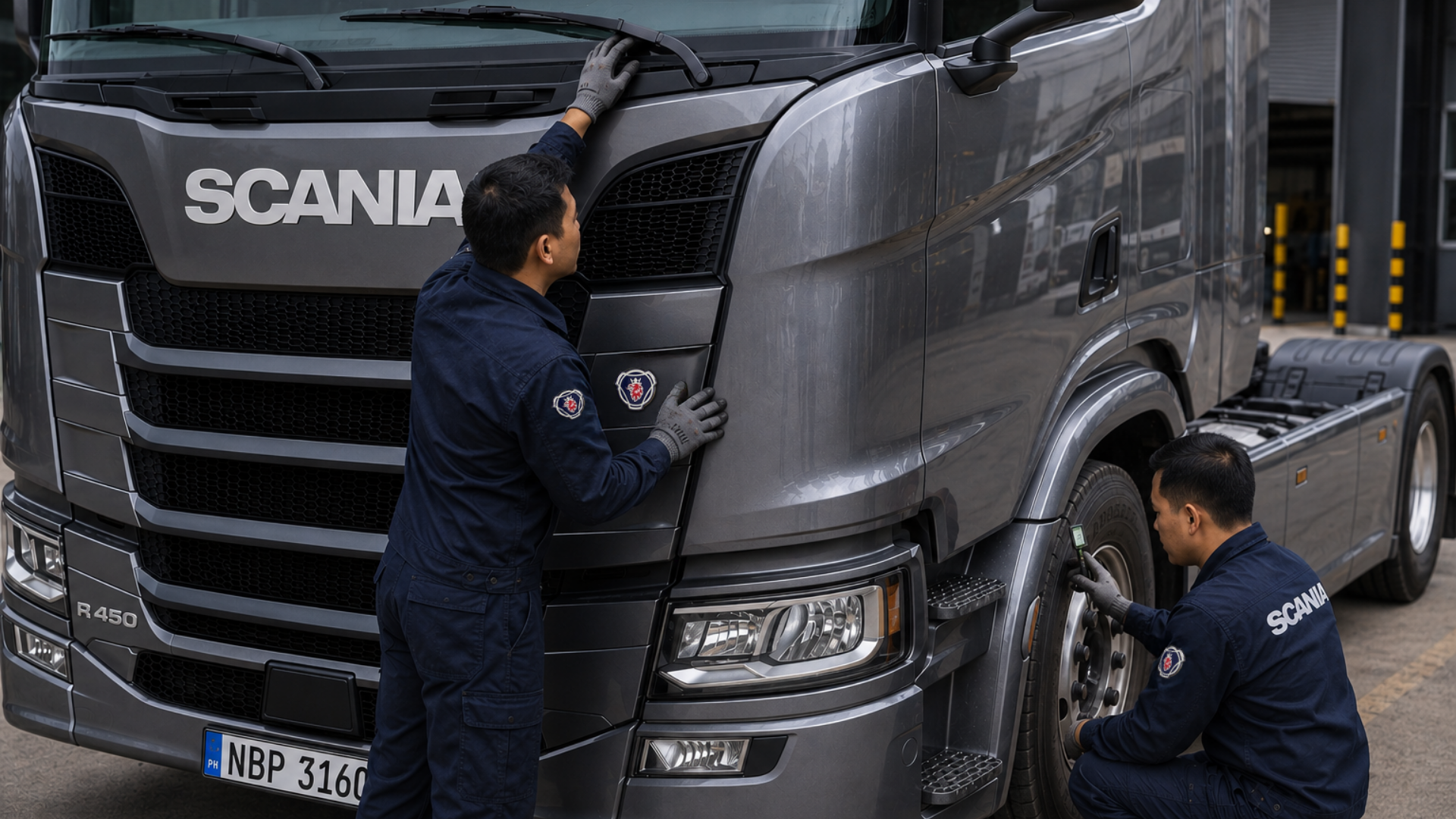
The Rainy Season is Here: Are Your Trucks Ready?
Wet season in the Philippines isn’t just inconvenient — it’s expensive. Flooded routes, typhoon delays, and Metro Manila gridlock. Your fleet feels all of it.
Bad weather is inevitable. A breakdown doesn’t have to be.
Here’s BJM’s practical guide to getting your heavy-duty trucks ready for whatever the wet season throws at them:
Table of Contents
Strategy 1: Waterproof Your Truck’s Brain (Electrical Systems)

Three things to do before the rains hit:
Inspect every wiring harness. Frayed insulation isn’t just wear — it’s a water entry point. Find it in the shop, not on the road.
Apply dielectric grease. Every connector, battery terminal, and sensor plug. It’s inexpensive and unglamorous, but it creates a waterproof seal that stops corrosion and prevents the ghost faults that are nearly impossible to diagnose roadside.
Check the alternator. During a heavy downpour, your truck is running headlights, wipers, and AC all at once. Make sure the alternator can handle that load — and that it’s properly shielded from water.
Electrical failures are the leading cause of wet-season breakdowns. Most of them are preventable.
Strategy 2: Stay Ahead with Lubrication

Strategy 3: Brake Confidence in Slippery Situations

Drain the air tanks every day. Moisture builds up in pneumatic brake systems quietly, corroding valves and degrading performance in ways you won’t notice until you actually need to stop hard. Make it part of the daily pre-trip routine, not an afterthought.
Don’t dispatch trucks with worn tires. Marginal tread on a wet road causes hydroplaning. At speed, a 30-ton truck that loses contact with the road stops being a brake problem and starts being something much worse. If the tread is borderline, the truck stays in the yard until it’s fixed.
Brakes and tires aren’t areas where you cut corners to meet a deadline. The cost of getting it wrong is too high.
Conclusion: Keep Your Fleet Afloat
Don't Let the Rain Wash Away Your Profits!
Is your workshop actually ready for the wet season? Take the guesswork out of your maintenance routine. Download our fast, printable guide to ensure every truck is typhoon-proof before it leaves the yard.
Your free guide is on the way!
Your requested PDF is on its way to your inbox! We've also added you to our newsletter so you can stay up-to-date with our latest news. If you ever change your mind, you can easily opt out by clicking the unsubscribe link at the bottom of any email. Thanks for downloading!
Comments are closed